EnergyBot rates are updated in real time. Partners don’t influence our content, but we may mention their plans. How we make money.

These are the electricity rates in Pennsylvania over the past year. It's important to note that these rates are for all utilities in Pennsylvania. Pennsylvania electric rates vary depending on how much energy you use. To shop for today’s electricity rates in Pennsylvania, visit this page.
Electric rates in Pennsylvania have been climbing since 2022. Every few months, the price to compare jumps again. That kind of subtle increase can add up fast on your bill.
What power do you have as a customer? Choice.
Most people don’t realize you can choose your electricity supplier. Many stay with their utility and never compare other options. In PA, that often means paying more than you need to.
There are licensed energy providers that offer lower rates than PPL, PECO, and other local utilities. The utility still delivers your power. Only the supply rate changes.
EnergyBot makes comparing plans simple. Enter your zip code and we’ll show you available rates for your home or business. Clear pricing. No fine print. No gimmicks.
Switching is done online in minutes. You won’t lose power. Service stays the same.
The full process takes about 15 minutes. The average user saves around 20% on their electric bill.
Questions come up. That’s normal. Our U.S.-based support team is ready to help by phone, email, or chat.
To help consumers find the best electric rates in Pennsylvania, the Pennsylvania Public Utility Commission created PA Power Switch, a website dedicated to helping Pennsylvania electric consumers secure the best plans outside of the price to compare.
Pro Tip: The price to compare (PTC) is the default Pennsylvania electric rate if you choose not to make the switch to a third-party electricity provider. While the price to compare allows Pennsylvania residents to opt out of shopping, you can typically find a cheaper fixed rate plan by comparing rates.
While PA Power Switch is a government-run and monitored website, some energy suppliers in Pennsylvania take advantage of the system by advertising tricky rates, variable rate plans, and other marketing gimmicks. That's why EnergyBot offers Pennsylvania residents a real rate when shopping, so you get the best energy prices. Our website reviews all the energy options and offers honest insights into which plans are the best for you based on your actual energy usage.
Switching suppliers is easy. Once you’ve compared your options and selected a new supplier, they’ll handle the switch for you. There’s no interruption in your service, no need for new equipment, and no fees for switching. Your local utility will still send you a single bill each month, but you could see lower rates or other benefits depending on your new supplier’s offerings.
Comparing electricity rates in Pennsylvania might seem complicated, but it’s easier than you think. Here's a simple step-by-step guide to help you navigate the process:
With just a few clicks, you can confidently compare Pennsylvania electricity rates and choose the plan that best meets your needs, potentially saving you a significant amount on your energy bill.
For businesses of all sizes – from small businesses to enterprise-level- the deregulated market has enabled competition. Today, every business has the ability to compare energy plans from top energy suppliers and shop for the best rate available.
In most cases, businesses will be able to effectively manage and/or reduce their monthly electricity costs by switching energy plans and electricity suppliers every year for competitive rates.
In 1994, the Pennsylvania Public Utilities Commission investigated the state’s energy market and published its findings in a report called “The Report and Recommendation on Electric Competition.” With this report, the Commission persuaded the state assembly to deregulate the state’s energy market, creating a free market with greater competition.
The Electricity Generation Customer Choice and Competition Act of 1996 set this plan in motion, beginning deregulation and splitting up existing energy monopolies. This bill included a schedule for a gradual transition to deregulation, giving one-third of the state’s electric consumers energy choice in 1999, with the rest following in 2000 and 2001.
Deregulation in Pennsylvania also applies to natural gas markets, allowing consumers to compare and choose natural gas plans from various providers.
Energy deregulation separated public utilities from energy providers. In this new market, customers can choose their energy provider based on rates and energy usage patterns. Energy providers compete to attract consumers by offering the lowest rates and the most customer-centric services.
Pennsylvania’s market deregulation rolled out slowly over almost 15 years but has been one of the most successful deregulations in the country.
While energy deregulation has the potential to bring immense benefits to residents and business owners across Pennsylvania, many don’t understand or even know about it. At EnergyBot, we’re dedicated to helping consumers understand the power of energy choice and using it to save money on their monthly electric bills.
One crucial step in understanding energy deregulation is distinguishing between public utilities and energy providers. In a deregulated energy market, each entity has different responsibilities.
Public utility companies are responsible for maintaining and operating power infrastructures like wires and towers, and these organizations deliver your energy to your home or business through your power lines each month. Pennsylvania’s local utilities include Penn Power, Penelec, Duquesne Light Company, PPL Electric Utilities, West Penn Power, and Met-Ed.
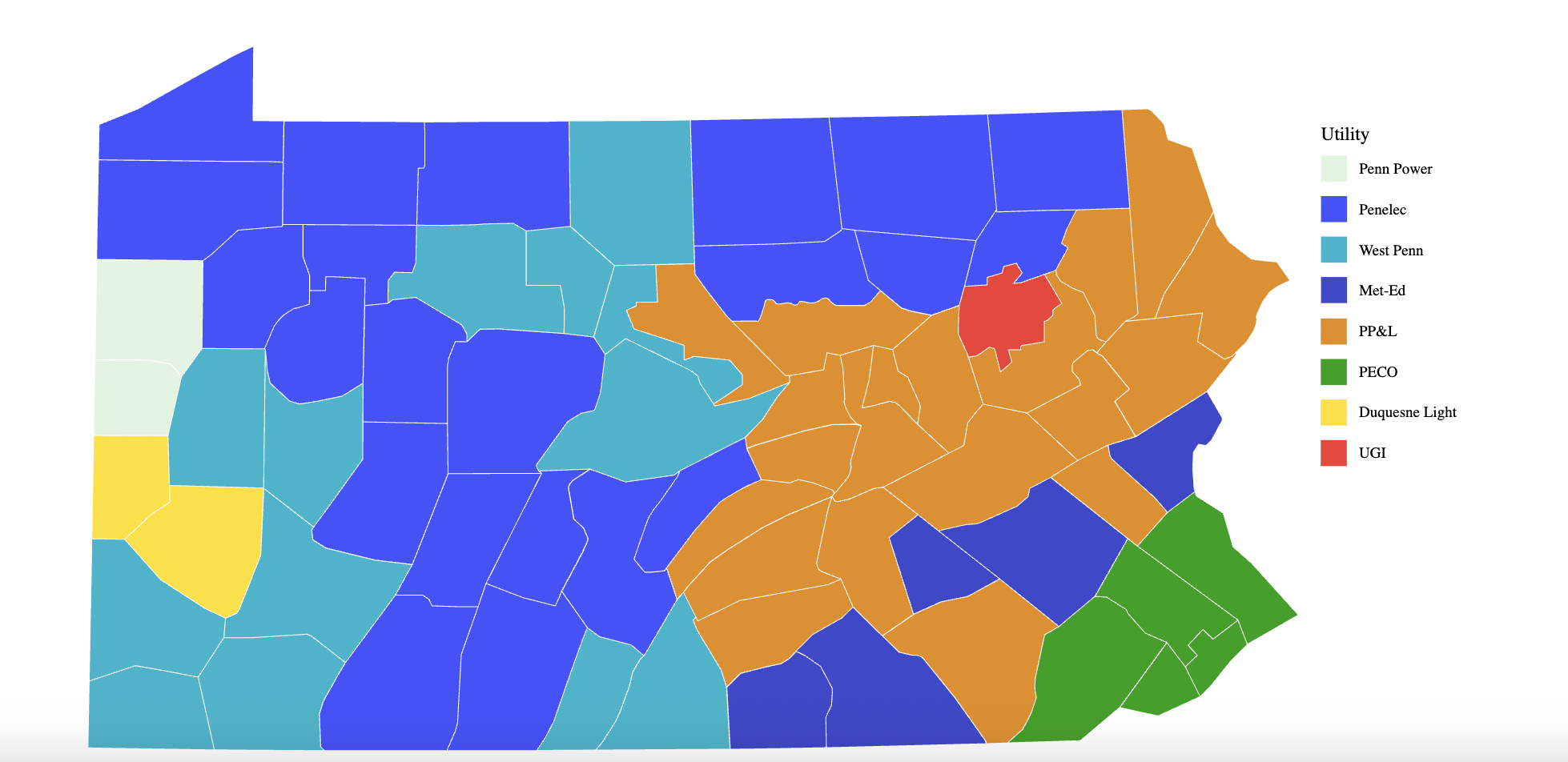
Pro Tip: Your Utility company will determine whether you have access to the PA Electric Choice program and can shop for electricity providers in the competitive electricity market.
Energy providers, on the other hand, purchase electricity wholesale from generators and resell the energy to consumers like you. They are competitive companies that offer different rates and services to attract customers. While you’re usually assigned a utility company based on your location, you can select whichever energy provider you’d like. Top energy providers in Pennsylvania include Direct Energy, Entrust, and Public Power.
Renewable energy sources provided about 4% of Pennsylvania's total energy generation in 2023. This energy was mainly generated by wind, hydropower, and biomass production. Wind energy was the state's largest source of renewable energy, accounting for about 36% of total renewable energy production that year, according to the Energy Information Administration (EIA).
As of January 2026, Pennsylvania has 27 operating wind farms across the state with a total generating capacity of almost 1,500 megawatts. That's over 700 utility-scale wind turbines. These farms are typically found along the state's Appalachian Mountain crests or along the shores of Lake Erie. Pennsylvania also has extensive opportunities for hydroelectric generation with more than 83,000 miles of rivers, streams, and non-powered dams.
 A+
A+
 PUC Licensed

 4.8
4.8